
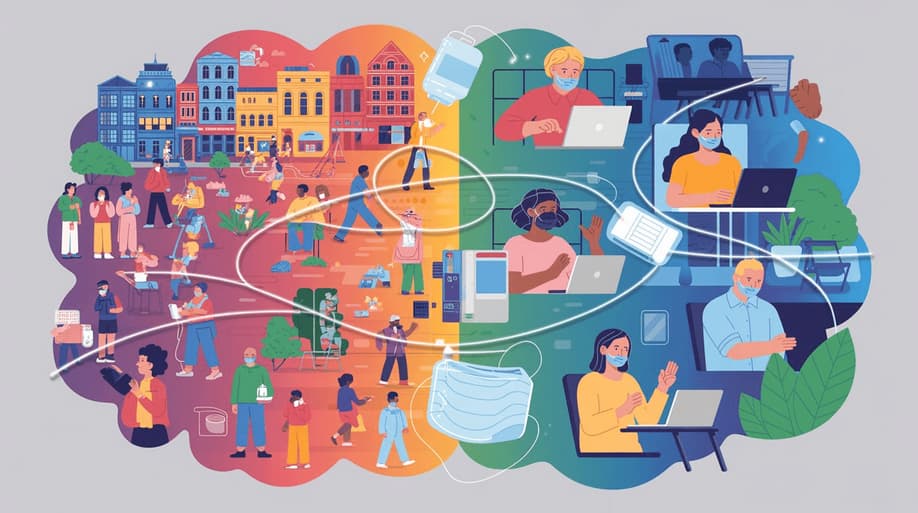
The global outbreak of COVID-19 in early 2020 ushered in an unprecedented era of quarantine and social distancing measures that reshaped everyday life across continents. What began as a public health strategy to contain a fast-spreading virus quickly evolved into a catalyst for widespread lifestyle transformation. From bustling cities to remote villages, people were compelled to adapt to a new reality—one that restricted physical movement, redefined social norms, and introduced a digital-centric way of living. While initially seen as a temporary disruption, quarantine soon revealed itself as a powerful force for long-term behavioral and societal change.
This period of enforced isolation acted as a global experiment in adaptation. Work, education, entertainment, relationships, and even shopping habits were swiftly reimagined to fit within the walls of our homes. The pandemic not only altered how people interacted with the world but also prompted a reevaluation of priorities, values, and mental well-being. These changes, both subtle and dramatic, have left a lasting imprint on the global population. As we emerge from the height of the crisis, it becomes increasingly important to understand how quarantine altered our lifestyles and what these shifts might mean for the future of human society.
Explanation of Quarantine
Quarantine is a well-established public health practice designed to limit the spread of infectious diseases by separating and restricting the movement of individuals who may have been exposed to a contagious pathogen. It differs from isolation, which targets individuals who are already sick. Quarantine is used for people who are not yet showing symptoms but could still transmit the disease to others.
Historically, quarantine has been used since the time of the Black Plague, but it became globally recognized during the COVID-19 pandemic due to its unprecedented scale and prolonged enforcement. Governments implemented varying levels of quarantine—from national lockdowns and travel bans to local stay-at-home orders and mandatory self-isolation after travel or contact with infected individuals. These efforts were aimed at “flattening the curve” and reducing the burden on healthcare systems. However, while effective, quarantine also had significant social, economic, and psychological impacts, reshaping how people live, work, and interact.
| Aspect | Details |
| Definition | A public health practice that restricts the movement of people who may have been exposed to an infectious disease but are not yet symptomatic. |
| Difference from Isolation | Quarantine = for people not yet sick but potentially exposed; Isolation = for those already infected. |
| Historical Use | Used since outbreaks like the Black Plague; gained renewed attention during the COVID-19 pandemic. |
| COVID-19 Measures | – Nationwide lockdowns.- Stay-at-home orders.- Travel restrictions.- Mandatory self-isolation after exposure or travel. |
| Purpose | To flatten the curve and reduce pressure on healthcare systems. |
| Consequences | – Social disruption.- Economic slowdown.- Psychological effects.- Shift in lifestyle and communication. |
Advantages of Changed Global Lifestyles Due to Quarantine
While quarantine brought many challenges, it also introduced several positive changes to global lifestyles that continue to influence how we live and work today. Key advantages include:
Remote Work Flexibility
- Enabled millions to work from home.
- Improved work-life balance and reduced commuting stress.
- Allowed companies to cut office-related expenses.
- Broadened access to global talent.
Expansion of Digital Education
- Accelerated the adoption of online learning platforms.
- Increased accessibility to education for remote and underserved areas.
- Encouraged self-paced and skill-based learning.
Stronger Family and Personal Connections
- Families spent more time together, strengthening bonds.
- Individuals had more time for personal development and reflection.
- Revival of family traditions like shared meals and activities.
Focus on Health and Wellness
- Growth in home fitness routines and virtual workouts.
- Rise in mindfulness practices, such as meditation and journaling.
- Increased awareness of mental health and emotional well-being.
Environmental Benefits
- Temporary drop in pollution levels due to reduced travel and industrial activity.
- Renewed interest in sustainable living and eco-conscious habits.
Technological Adaptation and Innovation
- Rapid improvement and use of communication tools (e.g., Zoom, Teams, Slack).
- Businesses innovated with digital solutions for delivery, customer service, and operations.
- Strengthened digital literacy across all age groups.
How Quarantine Changed Global Lifestyles
Quarantine drastically transformed global lifestyles by forcing individuals and societies to adapt to new norms almost overnight. It shifted work from traditional offices to remote and hybrid models, introduced widespread online education, and emphasized digital communication. Beyond professional changes, quarantine influenced health habits, relationships, and daily routines, encouraging self-care and sustainable living. These rapid adjustments revealed technology’s power to maintain continuity during crises and sparked lasting changes in values and priorities worldwide.
Key ways quarantine changed global lifestyles:
- Shifted millions of employees to remote and hybrid work models, redefining work-life boundaries.
- Accelerated adoption of digital communication tools for businesses and individuals.
- Transitioned educational institutions to online learning, increasing digital literacy needs.
- Increased focus on self-care, fitness, and mental well-being as public socializing decreased.
- Encouraged home-based activities like workouts, meditation, and cooking.
- Strengthened some family relationships while revealing tensions in others.
- Reduced travel and industrial activity, temporarily lowering pollution levels.
- Raised global awareness of sustainability and environmental responsibility.
- Prompted a broad reevaluation of personal and societal values, influencing lifestyles today.
Conclusion
The quarantine period during the COVID-19 pandemic marked a defining moment in modern history, triggering a widespread and lasting transformation of global lifestyles. What began as an urgent response to a health crisis evolved into a profound shift in how people work, learn, connect, and care for themselves and the world around them. From the rapid embrace of digital tools to the renewed focus on mental health, family, and sustainability, individuals and societies demonstrated remarkable resilience and adaptability in the face of uncertainty.
As the world gradually emerged from lockdowns and restrictions, many of the changes introduced during quarantine remained deeply embedded in everyday life. The experience not only challenged outdated systems and habits but also opened the door to more flexible, mindful, and technologically empowered ways of living. Ultimately, quarantine served as both a disruption and a catalyst—forcing humanity to reimagine what is essential and offering a new blueprint for how we might live more consciously and connected in the future.