
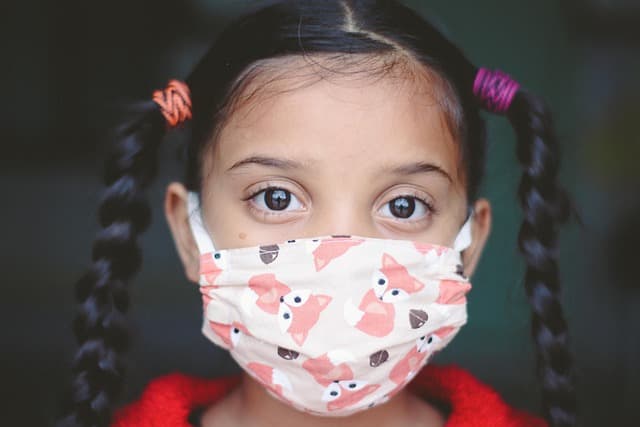
At the beginning of the coronavirus pandemic (in 2020), children were almost immune to the new virus. They were mild or asymptomatic. By now, however, several new strains of SARS-CoV-2 have emerged, and the situation has taken a turn for the worse. As of the end of November 2021, nearly 12,000 pediatric and adolescent deaths from CoV have been reported worldwide.
Coronavirus vaccination
Although coronavirus can now be quite a dangerous disease for children, most cases are still reported as mild or asymptomatic with no complications. Compared to the overall losses during the pandemic, pediatric mortality represents only 0.4% of all coronavirus deaths. Why children’s bodies are better protected, no one knows for sure yet. But there are several hypotheses:
- children’s organism is generally healthier: at this age, chronic pathologies (diabetes, cardiovascular diseases) are less common, lungs are not damaged by smoking and work in harmful industries;
- toddlers have a more “fast” immunity than adults. They still have little clumsy “heavy artillery” in the form of a specific immune response. Children’s bodies quickly produce many universal antibodies, which are directed, among other things, to fight the coronavirus;
- it is hypothesized that children’s lungs have fewer ACE2 cells that attack SARS-CoV-2. Therefore, lung tissue is less damaged.
Symptoms of COVID-19 in children
Coronavirus in children is insidious because its signs are often less pronounced than in adults and more like an acute respiratory infection. Parents think that the baby has a common cold and do not consult a doctor. And on day 5-7 the child rapidly develops complications: pneumonia, bronchitis, neuritis, myocarditis, etc. Chronic diseases can also worsen.
If in adults there is usually a certain sequence of appearance of clinical signs by day, then in pediatric patients it is not possible to identify these patterns.
The development of COVID-19 in young children depends on:
- the type of SARS-CoV-2 strain;
- the state of the immune system of the young patient;
- the source, type, duration of infection, and other factors.
Symptoms of coronavirus in children at the beginning of the disease may resemble:
- common respiratory illness (runny nose, fever, dry cough, sore throat);
- influenza (weakness, lethargy, fever);
- intestinal infection (nausea with vomiting, diarrhea, abdominal pain).
In this case, covid rarely begins with a loss of smell and taste. Often this symptom in babies is not observed at all.
Coronavirus in children: features at different ages
In general, covid is more severe in patients:
- At the age of 1 month to 1 year;
- over the age of 15 years;
- with chronic diseases and pathologies (immunodeficiencies, oncology, diabetes, encephalopathy, asthma, etc.).
In the rest of the kids, a mild course of COVID-19 is more common, or the disease is without symptoms and complications.
Let’s take a closer look at the features of the disease in babies of different ages.
Up to 1 year old
In children in infancy (up to 1 month) COVID-19 passes relatively easily. Severe forms of covid can take only in newborns with congenital abnormalities, tumors, underdeveloped lungs, premature babies. The rest may have a slight increase in temperature, lethargy, diarrhea, regurgitation and other mild symptoms.
Babies between the ages of 1 month and 1 year get coronavirus more often and more severely than other pediatric age groups. It is in them that cases of a serious complication – inflammatory multisystem syndrome (PIMS), which leads to damage to several organs at once, have been recorded.
Signs of COVID-19 in babies aged 4 weeks to 1 year often resemble an intestinal infection or rotavirus: vomiting, diarrhea, abdominal pain. In the future, the disease can be complicated by respiratory disorders, general intoxication, blood clotting disorders.
Be sure to consult a doctor if you notice one or more of the following symptoms in your baby:
- liquid stools several times a day (more than 5);
- greenish colored liquid stools or stools with flecks of blood;
- fever (above 38°);
- convulsions;
- palpitations;
- signs of abdominal pain (the child clutches his legs, cries, often wakes up).
From 1 year to 5 years
Babies in this age group often carry COVID-19 easily or even asymptomatically. The first signs in those who fall ill may be:
- sore throat;
- cough;
- runny nose;
- slight fever;
- weakness, lethargy, crankiness;
- GI disorders.
If the disease develops, there may be shortness of breath, violation of the rhythm of breathing.
From 5 to 12 years
In children of this age, COVID-19 usually occurs with a clinical picture close to acute respiratory viral infections: with a dry cough, sore throat, runny nose, fever up to 38 °, pain in the muscles and joints. In addition, sometimes there is sometimes a rash, inflammation of the mucous membrane of the eyes, headache. Signs of gastrointestinal disorders are not excluded.
At home to monitor the state of breathing is desirable to use a pulse oximeter. This is an inexpensive compact device that measures saturation – the oxygen content in the blood. Normal values are 96 units and above.