
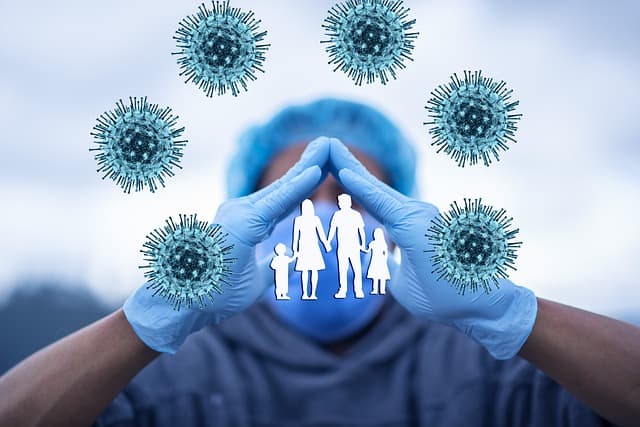
A vaccine is a biological preparation containing an antigen—a weakened, inactivated, or foreign part of a pathogen (virus, bacteria, or their component) that does not cause disease on its own but teaches the immune system to recognize and fight it.
After the vaccine is administered, the immune system reacts as if it had encountered a real infection: macrophages absorb the antigen, B lymphocytes start producing specific antibodies, and T lymphocytes destroy infected cells. At the same time, memory cells—B and T lymphocytes—are formed, which ensures a rapid and effective immune response when encountering the same pathogen again.
There are several types of vaccines:
- live attenuated vaccines, with a weakened pathogen (MMR, smallpox) — cause a strong and long-lasting immunity, but are contraindicated for weakened people and pregnant women;
- inactivated vaccines (killed viruses or bacteria) — safe, but may require more doses;
- subunit and polysaccharide vaccines — contain only components of the pathogen (e.g., shell proteins);
- vector-based vaccines — use another virus to deliver antigens;
- mRNA vaccines — contain genetic instructions for antibody synthesis (such as the Pfizer/Moderna vaccines) and are highly effective.
To enhance the immune response, vaccines often contain adjuvants — substances such as aluminum that make the body’s response stronger and longer lasting.
The administration of the vaccine causes the immune system to “train”: a slight fever, weakness, or pain at the injection site may appear — this is a natural sign of the formation of protection.
But the absence of symptoms does not mean that the vaccine is not effective — immunity is still being formed.
Why vaccination is important:
- It protects not only the vaccinated person, but also the entire community through herd immunity — when the majority does not get sick, the spread of infection is hindered, which protects those who cannot be vaccinated (immunocompromised individuals, newborns).
- Vaccines prevent serious illnesses, hospitalizations, and deaths — for example, they have completely eradicated smallpox and dramatically reduced cases of polio, measles, and tetanus.
- The benefit/risk ratio makes vaccines one of the most effective and economical public health measures — every dollar spent yields tens of dollars in benefits.
The vaccine development process is strictly regulated:
- Preclinical stages (on cells and animals) — safety and immunogenicity testing.
- Clinical phases I–III — involving tens to thousands of people, safety, dosage, and efficacy are studied.
- after registration and approval, post-marketing monitoring (phase IV) begins to identify rare side effects.
Innovative technologies such as mRNA and vector vaccines have made it possible to develop and introduce new drugs (including against COVID-19) in record time without sacrificing quality and safety.
So, vaccines:
- “train” the immune system without causing disease;
- form long-term protective mechanisms;
- prevent serious diseases and reduce the burden on the healthcare system;
- protect society as a whole.
Therefore, vaccination is a strategically important and safe decision for both the individual and society as a whole