
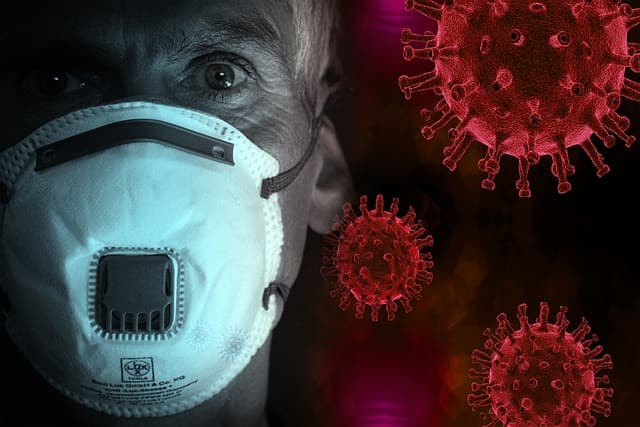
In April 2025, the global COVID-19 situation is characterized by a moderate increase in incidence, but no serious threats to public health as a whole are observed. In most countries, including Germany, India, and the US, new sub-variants of the virus have been identified, but they generally cause only mild symptoms and do not lead to an increase in hospitalizations.
In India, for example, there has been an increase in COVID-19 cases in early March 2025, especially in states such as Kerala, Maharashtra, and Delhi. There are about 5,364 active cases, with 764 new cases and four deaths reported in the last 24 hours. The main reason for the increase is the spread of the new NB.1.8.1 subvariant, which has also been detected in Washington, USA. In India, most of those infected are asymptomatic and are isolating at home. Authorities are urging citizens to be cautious, wear masks in public places, and practice good hygiene.
In Germany, as of the end of January 2025, there have been 38,828,995 cases of COVID-19 and 183,027 deaths. The number of active cases is 405,368. The situation is under control, but the authorities continue to monitor it and are prepared for possible changes in the epidemiological situation.
The World Health Organization (WHO) continues to track the spread of various sub-variants of the virus, including JN.1 and NB.1.8.1. Although the number of new cases worldwide has increased, mortality remains low. According to the latest data, approximately 147,000 new cases and 4,500 deaths were recorded during the 28-day period from January 6 to February 2, 2025, which is 16% less than in the previous period. Hospitalizations and intensive care admissions also decreased by 40% and 31%, respectively.
In India, despite the increase in cases, experts note that the current subvariant of the virus is a “great-grandchild” of the Omicron strain and causes only mild symptoms similar to seasonal respiratory infections. Mortality is observed mainly among people with severe comorbidities or weakened immunity. Overall, the situation remains under control, and the healthcare system is prepared for possible changes.
Thus, at present, COVID-19 continues to circulate in the global community but does not pose a significant threat to public health. Basic preventive measures, such as good hygiene and wearing masks in public places, remain relevant. Authorities in various countries continue to monitor the situation and are ready to respond quickly if necessary.