
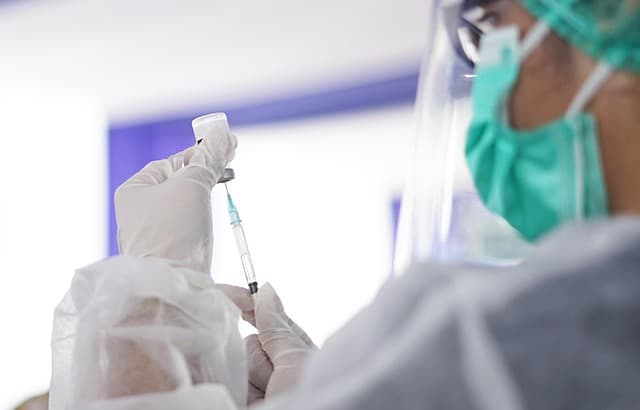
The development of vaccines against COVID-19 began in early 2020, immediately after scientists decoded the genetic code of the SARS-CoV-2 virus. This became the basis for creating vaccines, as knowledge of the virus’s structure made it possible to identify the target for the immune response — most often a protein spike structure (spike protein) through which the virus enters human cells.
The first stage — preclinical studies — was conducted on cell cultures and animal models (mice, monkeys). The goal was to test how safe the future drug was and whether it triggered an immune response. This stage usually lasts 1-2 years, but due to the pandemic, it was reduced to several months, in parallel with the start of clinical trials.
Clinical trials are divided into three phases:
Phase I — a small group of volunteers (from tens to hundreds). Doctors assess the safety of the vaccine, possible side effects, and determine the optimal dose. Here it is important to make sure that the vaccine does not cause serious complications.
Phase II — an expanded study involving several hundred people. Here, the immune response is studied, how well the body reacts to the vaccine, and the administration regimen is adjusted (for example, the number of doses and the interval between them).
Phase III is the largest stage, involving thousands of participants from different age groups and risk categories. This phase aims to confirm the vaccine’s effectiveness — how much it reduces the risk of infection or the severity of the disease. Safety monitoring also continues at this stage.
For COVID-19, the clinical phases were conducted in record time thanks to the combination of phases and the simultaneous conduct of parallel studies in different countries. This was made possible by large-scale funding and international cooperation.
After successful completion of clinical trials, the data was submitted to regulatory authorities — the FDA (US), EMA (Europe), and other national agencies. To combat the pandemic, many countries introduced an Emergency Use Authorization procedure, which allowed for a faster start to mass vaccination, but with strict quality and safety controls.
After the vaccines were approved, the post-marketing surveillance phase (phase IV) began. The vaccines continued to be monitored for rare and long-term side effects even after they were widely used. Monitoring systems, such as VAERS in the US, helped collect data and respond quickly to potential risks.
A distinctive feature of COVID-19 vaccines was the wide diversification of technologies: mRNA vaccines (Pfizer-BioNTech, Moderna), adenovirus vectors (AstraZeneca, Johnson & Johnson), inactivated viruses (Sinovac, Sinopharm), and others. Each technology had its own advantages and production characteristics, which helped speed up the overall development process.
Thus, the development of COVID-19 vaccines has become an example of a successful combination of accelerated procedures with the maintenance of strict safety and efficacy standards, which made it possible to launch a global fight against the pandemic in the shortest possible time.