
The clinical symptoms of coronavirus are similar to influenza or acute respiratory infections. With the onset of the cold season, it is important to diagnose early respiratory illness to rule out COVID-19. If a coronavirus patient is identified in the workforce, it is important to test all employees who have had contact with the person. A negative test is also required for entry into most countries and upon return home.
Different types of tests are used to test for the presence of COVID-19. Some determine the presence of traces of the virus (its RNA) in the body, while others detect the presence of antibodies that appear in the blood during infection. There are standard tests. the result of which will be known in 1-2 days, and there are express tests that allow you to know the results in just a couple of minutes. The method of biomaterial collection and the speed of readiness of the results – the main distinguishing features of tests for COVID-19. But all in order.
Types of COVID-19 tests
All COVID-19 tests can be divided into three types:
- PCR test (polymerase chain reaction). 2.
- SARS CoV-2 antigen tests
- ELISA (enzyme-linked immunosorbent assay):
- antibodies to SARS CoV-2 IgM
- antibodies to SARS CoV-2 IgG
PCR test
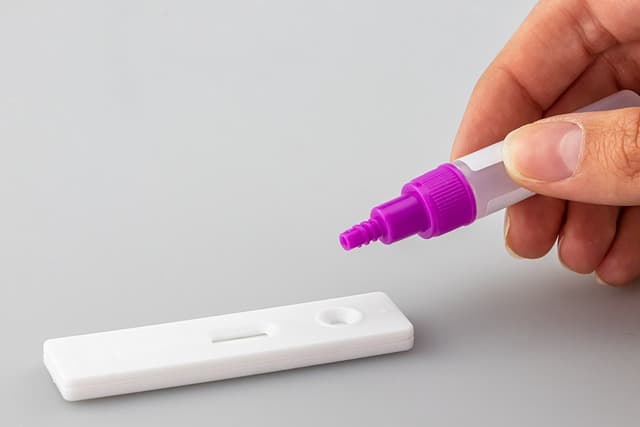
To check whether a person is currently ill with coronavirus infection and whether he or she can infect others (the danger is that the disease can often be asymptomatic), PCR tests are most often used. They allow you to detect the RNA of the virus. The doctor takes a swab from the patient’s nose and oropharynx. The advantage of this method of testing is high throughput, allowing thousands of people to be tested simultaneously. But if the test was taken at a clinic, the results would have to wait for several days. This problem is solved by the appearance of express PCR tests on the market. Following the instructions, the patient can independently take biomaterial from the nasopharynx. The kit contains everything necessary for independent research: test cassette, disposable pipette, reagent, napkin, instructions for use. The result will be ready in 10-15 minutes. This is an excellent option when you need to conduct testing at the company, in the office, at home, if you feel symptoms of acute respiratory viral infections or have recently been in contact with a sick person with coronavirus. Also, rapid tests are used by medical professionals when a patient is suspected of having COVID-19 and it is better to confirm the diagnosis as soon as possible for effective treatment.
By now, the express tests have a high degree of sensitivity and their results are reliable in more than 98 percent.
A viral antigen test shows whether there are proteins in the body that are part of the virus and are recognized by the immune system. If there are no antigens, the person is not infected. Nasal and oropharyngeal swabs are also taken for this test.
ELISA (enzyme-linked immunosorbent assay)
Unlike PCR, the ELISA method allows you to detect not the virus itself, but the body’s response to its invasion. This test makes it possible to determine the disease in the acute phase or at its completion. At the beginning of the disease, IgM antibodies are detected, after 10-14 days – IgG antibodies. For the test, the doctor takes blood from the vein. There are also express tests: a drop of blood is taken from the patient, placed in a special container and mixed with a reagent.
Antibodies to SARS CoV-2 IgM peak on day 5-7 from the onset of symptoms. A positive IgM test indicates that the disease is in the acute phase, and the immune system is actively fighting against the pathogen.
Antibodies to SARS CoV-2 IgG are protein compounds that indicate that a person is immune to coronavirus (i.e. the patient has already had coronavirus). IgG antibodies appear in the body no earlier than 10-14 days from the first day of symptoms, but doctors recommend taking this test no earlier than 3 weeks after the onset of infection.
Who should take the test and why
The main purpose of PCR and ELISA tests is to detect coronavirus infection in a person in time, quarantine the person and prevent the spread of infection. The tests are a fast, relatively inexpensive and effective way to detect infected people. In Comus you can buy single tests and advantageous packages of 25 pieces of rapid tests by PCR and ELISA methods. Each set contains everything you need for a full-fledged study. You can buy a set of several tests for team or home use.